 FoodGuardINDIA
10,802 Indian foods, read from the back
Ulta karke
dekho.
ulta karke dekho — turn it over and look
The front of a pack is advertising. The back is where the law makes the maker tell you what’s inside, in the smallest type on the box. FoodGuard reads the back for you. Search a pack by name, photograph its label or scan the barcode — and get every ingredient in plain words, sugar and salt in teaspoons, and one score from 0 to 100.
A made-up pack. The trick on it is real.
The back, decoded
Labels are written for inspectors. We rewrite them for you.
Everything on the back follows FSSAI’s rules — the order, the names, the INS numbers. Here is one mango drink, read the way FoodGuard reads it.
real mango!
INGREDIENTS · MANGO DRINK, 1 L
Water, Sugar1, Mango Pulp (19.5%)2, Acidity Regulator (INS 330), Stabiliser (INS 440), Antioxidant (INS 300), Colour (INS 110)3.
FoodGuard does this for any pack you scan, in about two seconds.
- Sugar comes before the mango.Lists run from the most to the least, so the bottle holds more sugar than fruit.
- Less than a fifth is fruit.The rest is mostly water and sugar.
- INS 110 is Sunset Yellow.A synthetic colour — the orange isn’t only mango.
On the shelf
10,802 foods. Already read.
Biscuits, namkeen, noodles, dairy, drinks — the packs on Indian shelves, each one scored and explained.
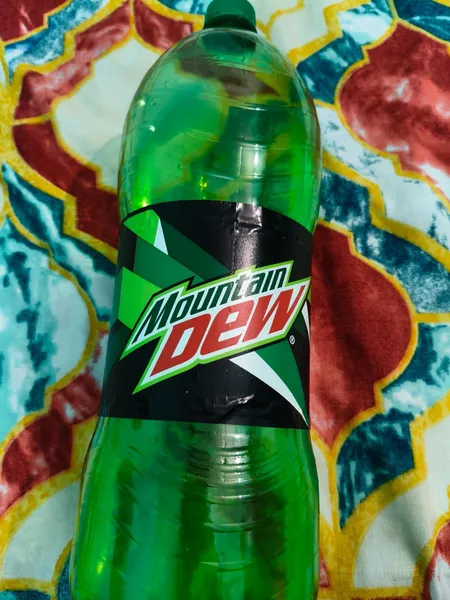 64
Mountain Dew
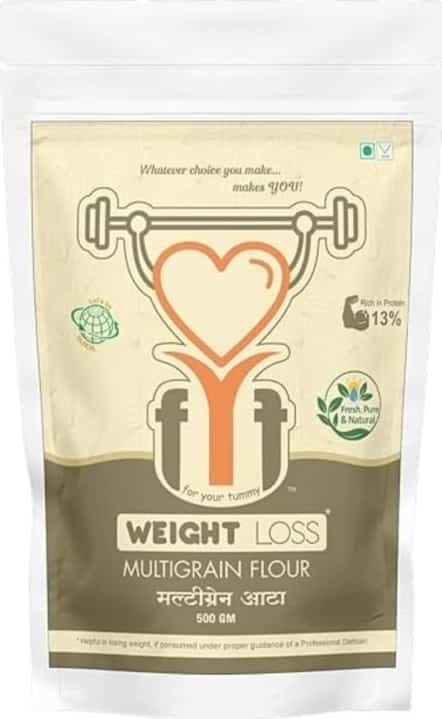 100
Fyt Weight Loss Multigrain Atta
 31
Puff
 92
Everest Chaat Masala
 100
Green Tea
 60
Amul Pasteurized Butter
 52
KitKat Rich Chocolate Coated Wafer
 59
Vanilla Milk
 30
Saffola Masala Oats - Classic Masala
 51
Lay's Potato Chips
 56
Knorr Schezwan Sauce 200 g
 56
Coca-Cola Company Maaza
 64
The Whole Truth Almond Raisin Dark Chocolate
 29
Kurkure Masala Munch
 51
Mountain dew 250ml
 46
Tedha Medha
 43
Super Millets Ragi And Jowar Cookies
 56
Fortune Physically Refined Rice Bran Oil
 51
Milk Ma Butter cookies
 98
Chicken Masala
 64
Protein Milkshake
 50
Marie Gold Biscuit
In your hand
Read the back before you buy.
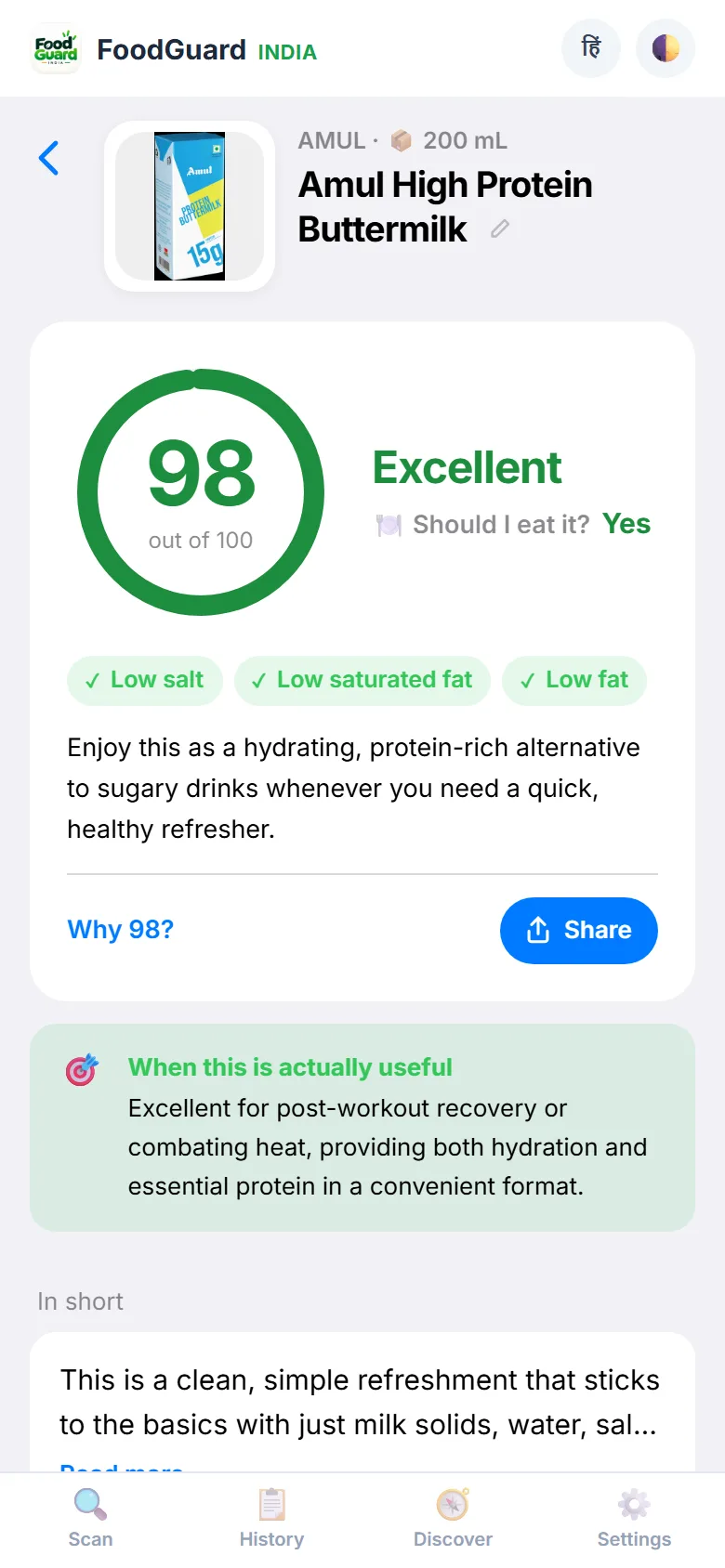
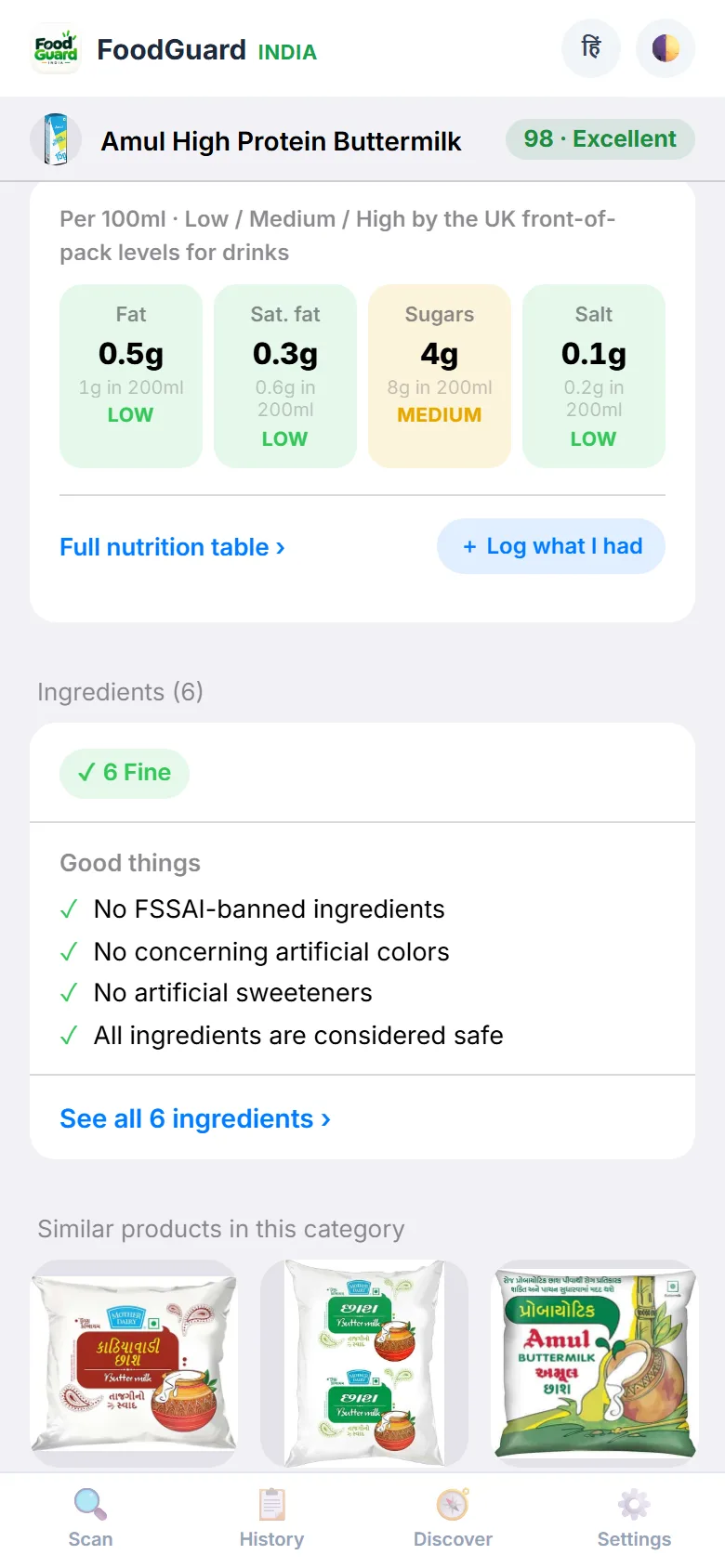
- No barcode needed.Type the name, or take a photo of the ingredient list on any pack — the label is all it needs.
- The score, and why, at a glance.High salt, low sugar, a flagged colour — the reasons sit right under the number.
- Sugar in teaspoons, not grams.One serving, a week, a year — at the rate you actually eat it.
- A better pick from the same shelf.A low score comes with higher-scoring products you can buy instead.
League tables
Every shelf, ranked.
The best-scoring packs in each category, from every product we’ve read.
Dairy & Frozen1,071 checked
- 1Amul Taaza milk 500ml100
- 2Alpino Natural Smooth Unsweetened Peanut Butter100
- 3FruBon White Desi Butter (Ghar ka Swaad)100
- 4Provilac Non-Homogenized A2 Milk100
- 5Growfitz Crunchy Peanut Butter100
Beverages727 checked
- 1Organic India, A TATA Product - Tulsi Original Herbal Infusion Bags100
- 2Green Tea100
- 3Vedmantra Garden Fresh Classic Tea100
- 4Teapoy Upper Assam CTC Tea100
- 5Tea masala100
Asked often.
Is FoodGuard free?
Yes. Scanning, scores and explanations are free, and there are no ads.
Where does the score come from?
From the ingredient list on the pack. Each ingredient is checked against public sources — FSSAI, the European Food Safety Authority and WHO guidance — and the product is scored on what it contains and how much of it. Where we have the nutrition panel, too much sugar, salt or saturated fat per serving counts too. The full method is here.
Is this medical or diet advice?
No. The score describes an ingredient list, not your health. For allergies, pregnancy, diabetes or any medical condition, please talk to a doctor or a registered dietitian.
Does a low score mean a product is unsafe?
No. Everything sold legally in India meets FSSAI rules. A low score means the list leans on things worth eating less often — refined flour, added sugar, certain additives — not that the food is dangerous.
A product looks wrong. What do I do?
Use the report option on the product, in the app or on its page here, or write to us. New products are checked by a person before they appear, and reported mistakes are fixed quickly.
Is there an iPhone app?
Not yet — the web app works in Safari on iPhone: scan or type the barcode, or photograph the label. On Android, get the app on Google Play.
Pehle check karo.
Phir khareedo.
Check first, then buy: search the name, photograph the label or scan the barcode. FoodGuard is free on Android and works in any browser — no account, no ads.

Point your phone’s camera here