 FoodGuardINDIA
Not the healthiest option on the shelf, but not the worst either — Sugar, Hydrogenated Veg, Salt are doing a lot of the work here instead of real ingredients.
Worth a closer look 4
Allowed in India, but better eaten less often.
-
Worth limitingSugarExcessive consumption is linked to metabolic health issues.
-
Worth limitingHydrogenated VegThis is a processed fat often containing trans fats, which are linked to heart disease and inflammation.
-
Worth limitingSaltExcessive intake is linked to high blood pressure and heart disease, making it a nutritional concern.
-
Worth limitingAdded FlavoursThe term is vague and often masks artificial chemicals used to mimic natural tastes.
The rest check out 11
Tap one to see why.
Milk Powder
It is a concentrated form of milk, generally safe but highly processed compared to fresh milk.
Rice
This is a staple whole food grain that provides essential energy.
Tapioca
It is a starch extracted from cassava root, commonly used as a thickener, though it is nutritionally empty.
Corn Starch
It is a refined carbohydrate used as a thickener that lacks significant nutrients.
Fat
This is a generic term for lipids, which are essential macronutrients, though the health impact depends entirely on the specific source (e.g., saturated vs.
Baking Powder
It is a standard leavening agent used in baking that is considered safe for consumption.
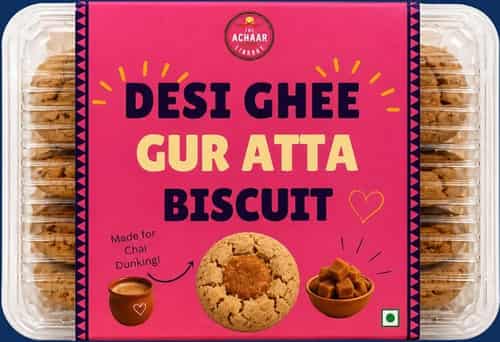
Clarified Butter Desi Ghee
It is a traditional, minimally processed fat source that is generally considered safe but should be consumed in moderation due to high calorie and saturated fat content.
Raising Agent (INS 500(ii))
This is standard baking soda, used to help dough rise.
Raising Agent (INS 503(ii))
Commonly used food additive with a long history of safe use.
Emulsifier (INS 471)
These are common fats found in many foods and are harmless.
Allergens: Milk
This is a mandatory allergen declaration required by law to protect consumers with dairy allergies.
Higher-scoring options
This score rates the ingredient list using our published method and public sources (FSSAI, EFSA, WHO). It is general information, not medical advice, and does not mean the product is unsafe — products sold in India meet FSSAI rules. Recipes change: check the pack in your hand. Brand owner? Write to hello@foodguards.space.