 FoodGuardINDIA
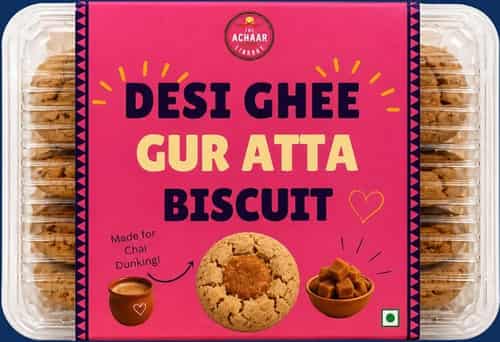
These biscuits blend traditional atta and ghee with a touch of cardamom for flavor, but they do contain sugar as a key sweetener. It's a classic tea-time snack profile relying on simple, recognizable pantry staples.
Worth a closer look 1
Allowed in India, but better eaten less often.
-
Worth limitingSugarExcessive consumption is linked to metabolic health issues.
The rest check out 8
Tap one to see why.
Wheat Flour
Unless specified as 'whole wheat', this is often refined (maida), which lacks fiber and has a high glycemic impact.
Desi Ghee
It is a traditional, whole-food fat source, though it is calorie-dense and should be consumed in moderation.
Butter
While a natural food, it is high in saturated fat and should be consumed in moderation.
Milk
Milk is a natural, nutrient-dense whole food providing protein and calcium.
Refined Wheat Flour
It is nutritionally stripped of fiber and essential nutrients during processing, leading to rapid blood sugar spikes.
Milk Powder
It is a concentrated form of milk, generally safe but highly processed compared to fresh milk.
Cardamom Powder
A natural, whole spice used for aromatic flavoring.
Baking Powder
It is a standard leavening agent used in baking that is considered safe for consumption.
Higher-scoring options
This score rates the ingredient list using our published method and public sources (FSSAI, EFSA, WHO). It is general information, not medical advice, and does not mean the product is unsafe — products sold in India meet FSSAI rules. Recipes change: check the pack in your hand. Brand owner? Write to hello@foodguards.space.